研討會專題演講
Title: High-Performance Control and Applications)
Dr. Tsu-Chin Tsao (B.S. National Taiwan University, Taiwan, M.S., Ph.D. U.C. Berkeley), is Distinguished Professor at the Mechanical and Aerospace Engineering Department, Samueli School of Engineering and Applied Science, University of California Los Angeles. His research interest includes control systems, mechatronics, and robotics. An ASME Fellow, Dr. Tsao has served in leadership and editorship positions as Department Chair and Journal’s Editor-in-Chief. His research work was recognized by several Best Paper Awards, International Federation of Automatic Control (IFAC) Mechatronic Systems Award, and ASME Henry M. Paynter Outstanding Investigator Award. Dr. Tsao’s career has engaged in numerous advanced research for industry and mission oriented agencies, and his work in intraocular robotic surgery has spun off to founding a start-up company.
Mechanical motion generation and vibration suppression is fundamental to modern machines and emerging innovations. Abilities to learn and compensate for complex mechanical system and disturbance dynamics are key to synthesizing adequate control actions to achieve precision motions. Using application case studies to motivate challenges and demonstrate implementation results, I will present control methods for addressing narrowband (repetitive control, iterative learning control) and broadband (adaptive control) motions and disturbances, and a road range of applications.
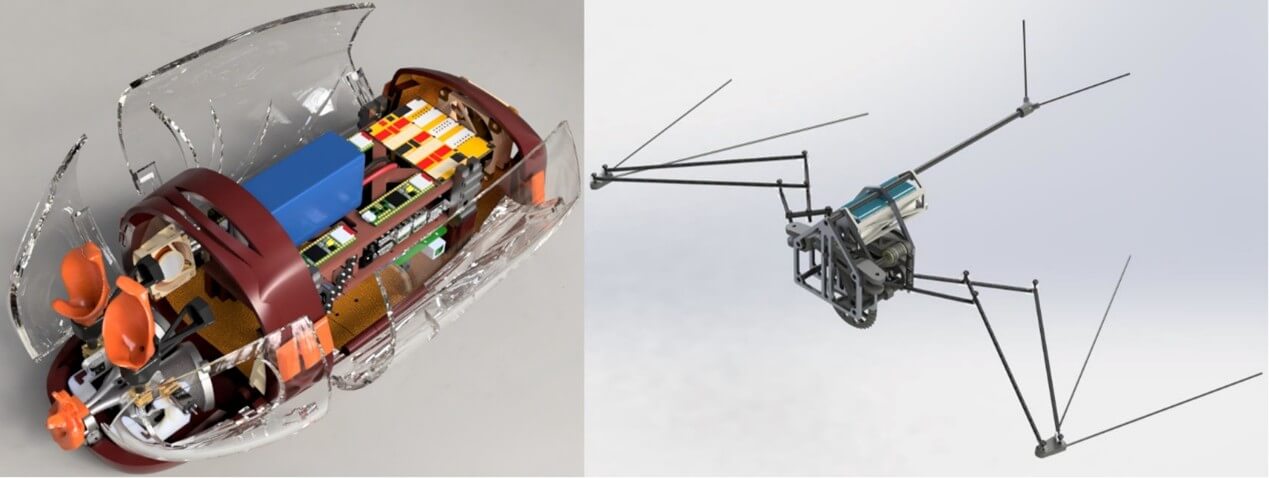
Title: From Bats to Bots: Embodied AI for Autonomy in Complex Environments
Rolf Mueller
Rolf Mueller has studied the unique sensorimotor abilities of bats as a model for autonomy in complex natural environments for over 25 years. He received his degrees in neuroscience from the University of Tuebingen in Germany and has been a postdoc in electrical engineering at Yale University. He currently serves as the Lynn professor of Mechanical Engineering at Virginia Tech and the university's Center for Bioinspired Science and Technology. He has been a Fellow of the Acoustical Society of America since 2019. His current research focuses on the integration of AI and robotics for autonomy in complex natural environments. In his international activities, he has conducted research on east and southeast Asian bats for almost 20 years. His interdisciplinary research has been published in some of the most reputed journals in the respective fields such as Proceedings of the National Academy of Sciences, Physics Review Letters, Nature Machine Learning, and the Journal of Experimental Biology. His work has been covered by international news outlets such as the New York Times, the BBC, MSNBC, the Discovery Channel, National Geographic, and Nature.
Achieving autonomy in complex natural environments represents a grand challenge for the next generation of intelligent systems. Such capability is essential for addressing critical societal needs including sustainable food and resource production, disaster prevention and mitigation, ecosystem health, and national security. Realizing this vision demands not only highly dexterous mobility and advanced artificial intelligence (AI), but - crucially - a synergistic integration of mobility, perception, and understanding of complex environments. Among the major hurdles, sensing remains one of the most persistent obstacles. Current approaches to autonomy rely predominantly on camera imaging and LiDAR, the latter of which extends vision-based paradigms into three-dimensional space. Both types of approach emphasize the recognition of deterministic shapes. In contrast, echolocating bats demonstrate a strikingly different and highly efficient sensing strategy. These animals successfully navigate dense vegetation using only one-dimensional echo streams received at two ears, processed by comparatively small brains and learned from limited data. Their performance illustrates an extraordinary degree of parsimony in sensory encoding and neural computation, particularly given the physical constraints of their sonar systems, which cannot rely on large apertures to form narrow beams. Through a combination of biomimetic robotics and deep-learning analysis, it becomes increasingly possible to uncover how bats extract and represent critical environmental information—such as object identity and
passageway geometry—from complex echo patterns. These insights suggest the feasibility of alternative AI paradigms for autonomy in complex environments, grounded not in visual template matching but in the detection of statistical invariants within stochastic sensory signals. Such biologically inspired approaches may ultimately redefine the foundations of sensing and intelligence for autonomous systems operating in the real world. Future work will be directed at the question of how to best integrate this novel environmental sensing paradigm with the control of flapping flight motion.